 |
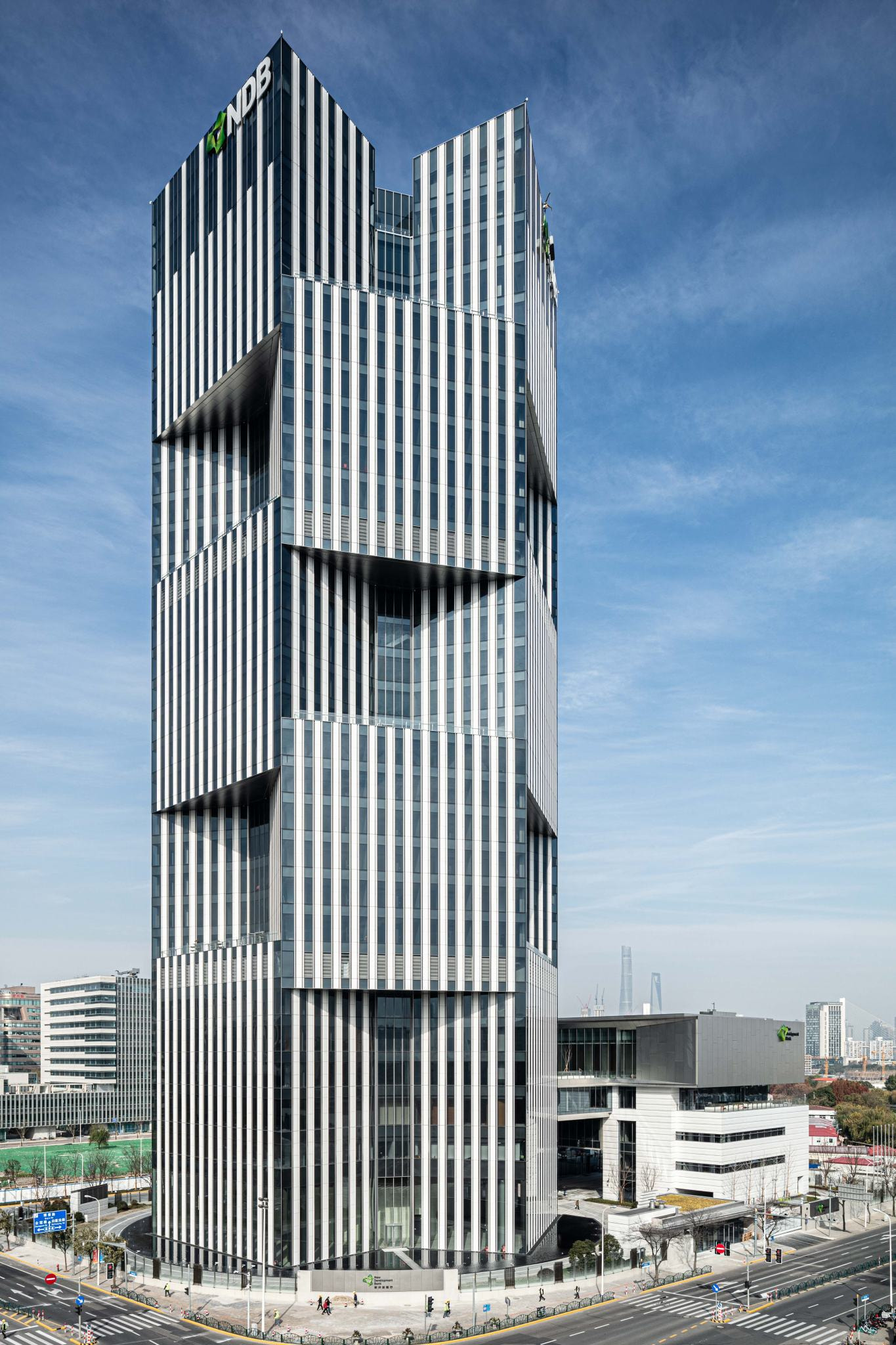
| New Development Bank HQ Shanghai Donnie28, CC BY-SA 4.0, via Wikimedia Commons |
The BRICS Group—comprising Brazil, Russia, India, China, and South Africa—has evolved from a conceptual grouping of emerging economies into a significant coalition influencing global economic and geopolitical dynamics.
Initially formed to challenge the dominance of Western powers, BRICS has expanded to include additional members, reflecting its growing influence and commitment to representing the Global South.
This essay delves into the origins, objectives, economic impact, geopolitical significance, challenges, and future prospects of the BRICS Group, providing a comprehensive analysis for students, researchers, and formal academics.
2. Historical Background
Origins and Formation
The concept of BRICS was first introduced by economist Jim O'Neill in 2001, who identified Brazil, Russia, India, and China as rapidly growing economies with the potential to drive global economic growth. These countries, often referred to as the "BRIC" nations, shared common characteristics such as large populations, emerging markets, and increasing influence in global affairs.
The first formal summit of the BRIC countries took place in 2009 in Yekaterinburg, Russia. This summit marked the beginning of regular diplomatic engagements among these nations, focusing on enhancing economic cooperation and reforming global governance structures. The inclusion of South Africa in 2010 transformed BRIC into BRICS, reflecting the group's commitment to representing the Global South.
Expansion to BRICS+
In 2024, BRICS expanded further with the admission of six new members: Egypt, Ethiopia, Iran, Saudi Arabia, the United Arab Emirates (UAE), and Indonesia. This expansion, often referred to as "BRICS+", aimed to increase the group's global influence and better represent the diverse interests of emerging economies. The inclusion of these countries reflects BRICS's strategy to enhance its geopolitical clout and foster greater cooperation among developing nations.
3. Objectives of BRICS
The BRICS Group was established with several key objectives:
-
Economic Cooperation: Promoting sustainable economic growth among member states through trade facilitation, investment, and infrastructure development.
-
Reform of Global Governance: Advocating for reforms in international institutions like the International Monetary Fund (IMF) and the World Bank to better reflect the interests of emerging economies.
-
Political Dialogue: Enhancing political coordination among member states on global issues, including security, climate change, and development.
-
Cultural Exchange: Fostering people-to-people ties and cultural understanding among diverse societies.
4. Economic Impact
Collective Economic Strength
As of 2025, the BRICS countries collectively account for approximately 40% of global GDP (based on purchasing power parity) and about 46% of the world's population. This economic heft positions BRICS as a formidable bloc in global trade and investment.

NDB HQ in Shanghai
Bb3015, CC BY-SA 4.0,
via Wikimedia Commons
New Development Bank (NDB)
Bb3015, CC BY-SA 4.0,
via Wikimedia Commons
One of BRICS's significant achievements is the establishment of the New Development Bank in 2014.
The NDB aims to finance infrastructure and sustainable development projects in emerging economies, providing an alternative to Western-dominated financial institutions.
The bank has approved numerous projects across member states, focusing on areas such as renewable energy, transportation, and urban development.
Contingent Reserve Arrangement (CRA)
In 2015, BRICS launched the CRA, a framework for providing protection against global liquidity pressures. The CRA serves as a financial safety net for member countries during economic crises, enhancing their financial stability. The arrangement has been instrumental in mitigating the impact of global financial volatility on member states.
5. Geopolitical Significance
Advocacy for a Multipolar World
BRICS has consistently advocated for a multipolar world order, challenging the dominance of Western powers, particularly the United States. The group's collective stance on various international issues reflects its commitment to a more balanced global power structure.
Diplomatic Initiatives
BRICS has initiated several diplomatic efforts to address global challenges. For instance, the group has called for comprehensive reforms in the IMF to increase the representation of developing countries. Additionally, BRICS has engaged in dialogues on climate change, cybersecurity, and counterterrorism, aiming to present a united front on these critical issues.
Regional Influence
Each BRICS member exerts significant influence in its respective region. For example, China and India play pivotal roles in Asia's economic and security dynamics, while Brazil and South Africa are key players in Latin America and Africa, respectively. This regional influence enhances BRICS's overall geopolitical clout.
6. Institutional Framework
The BRICS Group operates through various institutional mechanisms to achieve its objectives:
-
Annual Summits: Heads of state meet annually to discuss and coordinate on key issues.
-
Ministerial Meetings: Regular meetings of foreign ministers and other officials to facilitate cooperation.
-
Working Groups: Specialized groups focus on areas such as trade, finance, and development.
-
New Development Bank (NDB): Provides funding for infrastructure and development projects.
-
Contingent Reserve Arrangement (CRA): Offers financial support during economic crises.
These institutions play a crucial role in implementing BRICS's initiatives and ensuring effective cooperation among member states.
7. Challenges and Criticisms
Despite its achievements, BRICS faces several challenges:
-
Divergent National Interests: Differences in political systems, economic policies, and strategic priorities can hinder consensus-building.
-
Institutional Limitations: The group's informal structure and lack of binding agreements may limit its effectiveness.
-
Geopolitical Tensions: Conflicting interests among member states, such as border disputes and regional rivalries, can complicate cooperation.
-
External Pressures: Resistance from established powers and international institutions may pose challenges to BRICS's initiatives.
Addressing these challenges requires enhanced dialogue, institutional strengthening, and strategic alignment among member states.
8. Case Studies
China
China's economic rise has been a significant driver of BRICS's growth. As the world's second-largest economy, China contributes substantially to the group's GDP and plays a leading role in initiatives like the Belt and Road Initiative. However, its assertive foreign policy and territorial disputes have sometimes strained relations with other BRICS members.
India
India's growing technological and service sectors have bolstered BRICS's economic profile. The country's emphasis on digital infrastructure and innovation aligns with the group's development goals. Nonetheless, India's strategic partnerships with Western nations occasionally create tensions within the bloc.
Russia
Russia's energy resources and geopolitical influence are vital to BRICS's global standing. The country's involvement in regional security issues and its stance on international conflicts often shape the group's diplomatic initiatives.
Brazil
Brazil's leadership in Latin America and its role as an agricultural powerhouse contribute to BRICS's economic diversity. Domestic political challenges and economic fluctuations, however, can affect the group's cohesion.
South Africa
South Africa serves as a gateway to Africa, facilitating BRICS's engagement with the continent. Its participation in peacekeeping missions and regional development projects enhances the group's geopolitical influence.
BRICS+
The inclusion of Egypt, Ethiopia, Iran, Saudi Arabia, UAE, and Indonesia in 2024-2025 has expanded BRICS's reach. These new members bring additional resources, markets, and strategic advantages, further solidifying the group's position in global affairs.
9. Comparative Analysis
When compared to other international organizations like the European Union (EU) and the Group of Seven (G7), BRICS offers a unique platform for emerging economies. While the EU and G7 are characterized by economic integration and shared values, BRICS emphasizes South-South cooperation and multipolarity. The group's diverse membership and focus on development distinguish it from other global blocs.
10. Future Prospects and Policy Recommendations
Looking ahead, BRICS faces several opportunities and challenges:
-
Expansion: Further enlargement could enhance the group's global influence but may require institutional adjustments to accommodate new members.
-
Institutional Strengthening: Developing formal agreements and enhancing the NDB and CRA's capabilities can improve effectiveness.
-
Strategic Alliances: Building partnerships with other emerging economies and regional organizations can bolster BRICS's position.
-
Sustainable Development: Focusing on environmental sustainability and inclusive growth aligns with global development goals.
Policy recommendations include:
-
Establishing a BRICS development agenda with clear objectives and timelines.
-
Enhancing transparency and accountability in decision-making processes.
-
Promoting people-to-people exchanges and cultural diplomacy.
-
Strengthening the group's voice in international forums and negotiations.
11. Conclusion
The BRICS Group has transformed from a conceptual alliance into a formidable coalition influencing global economic and geopolitical dynamics. Through its collective efforts, BRICS has advocated for reforms in global governance, promoted economic cooperation among member states, and contributed to a more multipolar world order.
While challenges remain, the group's expansion and institutional development signal a commitment to enhancing its role in shaping the future of international relations.


No comments:
Post a Comment