.jpg)
Adam Smith
Scottish National Gallery ,
Public domain,
via Wikimedia Commons
Scottish National Gallery ,
Public domain,
via Wikimedia Commons
Introduction
“Explore the history of economics from ancient thought to modern theories: Smith, Marx, Keynes, Friedman & beyond shaping today’s global economy.”
Economics is one of the most influential disciplines shaping human history, society, and policy. As both a social science and a practical tool for governance and commerce, economics studies how scarce resources are allocated to satisfy unlimited wants.
Over time, economic thought has reflected changing conditions—ancient barter systems, medieval moral theology, mercantilist empires, industrial revolutions, and globalized digital economies.
The history of economic theory is not a linear progression but rather a dialogue across centuries, with each new school of thought building upon or challenging its predecessors. By exploring the origins of economic ideas, classical theories, and early critiques, we can see how economics developed into a rigorous field of study and a central force in modern policymaking.
This first section traces the intellectual evolution of economics from ancient times through Classical Economics (18th–19th century). It highlights key thinkers, their theories, and the historical context that shaped them.
I. The Origins of Economic Thought
1. Ancient Civilizations and Early Economic Practices
Economic activity is as old as human civilization. In Mesopotamia, clay tablets from around 2000 BCE record transactions, wages, and even interest rates, showing an early recognition of financial contracts. The Babylonians developed codes regulating property rights and trade, such as the Code of Hammurabi, which prescribed rules for lending and debt.
In ancient Egypt, economic organization was heavily centralized. Grain storage facilities served as both food security measures and proto-banking systems. The state redistributed resources, maintained irrigation systems, and collected taxes, demonstrating an early form of managed economy.
 |
| Chanakya Writer of Arthshastra See page for author, Public domain, via Wikimedia Commons {{PD-US}} |
In China, Confucian and Legalist traditions debated the moral and practical role of wealth, agriculture, and governance.
These societies did not produce formal economic “theories” in the modern sense, but they developed institutions, practices, and moral frameworks that shaped commerce, taxation, and resource management.
2. Greek Contributions: Philosophy and Economics
The Greeks were the first to engage in systematic reflection on economics.
-
Plato (427–347 BCE) discussed division of labor in The Republic, envisioning an ideal society where individuals specialize in roles suited to their talents. His concern was not efficiency alone but justice and harmony.
-
Aristotle (384–322 BCE) distinguished between oikonomia (household management) and chrematistics (money-making). He criticized excessive pursuit of wealth and emphasized the moral dimensions of exchange. Aristotle also examined value, differentiating between use value (utility) and exchange value (trade worth).
These insights foreshadowed later debates on labor, value, and ethical constraints in economic life.
3. Roman Legal and Economic Practices
The Romans were less theoretical but highly pragmatic. Their most enduring contribution was the development of legal frameworks that underpinned property rights, contracts, and inheritance—foundations of commerce still relevant today. Roman innovations in infrastructure, taxation, and administration enabled long-distance trade across the empire.
Although Romans did not produce a systematic economic theory, their institutional legacy deeply influenced later European economic development.
II. Medieval and Scholastic Economic Thought
1. The Scholastics: Morality and Markets
With the fall of Rome, economic thought in Europe was dominated by Christian theology. Medieval scholastic thinkers, particularly Thomas Aquinas (1225–1274), sought to reconcile Aristotelian philosophy with Christian doctrine.
Key contributions:
-
The Just Price Doctrine: A “fair” price was one that reflected true value, preventing exploitation.
-
Condemnation of Usury: Charging interest was considered sinful, as money was not seen as a productive good.
-
Economic Justice: Commerce was acceptable only if it served the common good and avoided greed.
This moral framework prioritized ethics over efficiency, contrasting sharply with later market-driven theories.
2. Islamic Golden Age Economics
Between the 8th and 14th centuries, Islamic scholars advanced economic thought far beyond medieval Europe.
-
Abu Yusuf (8th century) wrote on taxation and fiscal policy.
-
Ibn Khaldun (1332–1406) analyzed labor, value, and economic cycles. He argued that labor is the source of value, foreshadowing labor theories later refined by Smith and Marx. He also developed a theory of dynastic rise and fall, linking taxation, productivity, and social cohesion.
Islamic contributions were both theoretical and practical, influencing trade networks that stretched from Spain to India.
III. The Rise of Mercantilism (16th–18th Century)
_(cropped).jpg)
Landing of Columbus
John Vanderlyn, Public domain, via Wikimedia Commons
1. Historical Context
John Vanderlyn, Public domain, via Wikimedia Commons
The Age of Exploration and the rise of nation-states transformed economic thought. Colonization, trade routes, and emerging global markets required new frameworks. Journey of Columbus is one of the important journeys.
Out of this environment emerged mercantilism (1500s–1700s), which dominated European economic policy.
2. Core Principles of Mercantilism
-
Wealth measured in precious metals: Gold and silver were equated with national strength.
-
Trade Surpluses: Exports were encouraged, imports discouraged.
-
State Intervention: Governments regulated industries, established monopolies, and imposed tariffs.
-
Colonial Expansion: Colonies provided raw materials and markets.
3. Key Mercantilist Thinkers
-
Thomas Mun (1571–1641) in England defended trade surpluses as essential for prosperity.
-
Jean-Baptiste Colbert (1619–1683), finance minister to Louis XIV of France, advocated state-driven industrial and trade policies.
Mercantilism emphasized power and protectionism, contrasting with later liberal theories that favored free markets.
4. Critiques and Transition
Mercantilism faced criticism for stifling individual initiative and overemphasizing bullion. The stage was set for a new school of thought—Classical Economics—which argued that wealth was created not by hoarding gold but by productive labor, trade, and efficient allocation of resources.
IV. The Birth of Classical Economics (18th–19th Century)
Adam Smith
Scottish National Gallery ,
Public domain,
via Wikimedia Commons
1. Adam Smith: The Father of Modern Economics
Scottish National Gallery ,
Public domain,
via Wikimedia Commons
The turning point came with Adam Smith’s The Wealth of Nations (1776). Smith laid the foundations of modern economics by emphasizing markets, specialization, and limited government intervention.
Key ideas:
-
Division of Labor: Specialization increases productivity (e.g., his famous pin factory example).
-
Invisible Hand: Individuals pursuing self-interest inadvertently benefit society.
-
Limited Government: The state should provide defense, justice, and public works but not micromanage the economy.
Smith’s optimism about self-regulating markets stood in stark contrast to mercantilist controls.
.jpg)
David Recardo
See page for author,
Public domain, via
Wikimedia Commons {{PD-US}}
2. David Ricardo and Comparative Advantage
See page for author,
Public domain, via
Wikimedia Commons {{PD-US}}
David Ricardo (1772–1823) expanded Smith’s ideas with his principle of comparative advantage, showing how nations benefit from trade even when one is more efficient at producing all goods.
This theory still underpins modern international trade policy.
Ricardo also explored income distribution, arguing that landlords, workers, and capitalists had conflicting interests.
3. Thomas Malthus: Population and Scarcity
 |
| Thomas Robert Malthus John Linnell, CC BY 4.0, via Wikimedia Commons |
Thomas Malthus (1766–1834) took a more pessimistic view. In An Essay on the Principle of Population (1798), he argued:
-
Population grows geometrically, while food supply grows arithmetically.
-
Unchecked growth would lead to famine, poverty, and misery.
While technological progress has disproved Malthus’s dire predictions, his emphasis on resource limits continues to influence debates on sustainability and development.

John Stuart Mill
London Stereoscopic Company,
Public domain, via Wikimedia
Commons {{PD-US}}
4. John Stuart Mill: Liberty and Social Reform
London Stereoscopic Company,
Public domain, via Wikimedia
Commons {{PD-US}}
John Stuart Mill (1806–1873) refined classical economics by integrating social philosophy. He defended free markets but also emphasized liberty, utility, and the need for social reform.
Mill argued that while production followed natural laws, distribution could be altered by policy to promote fairness.
This blending of individual freedom with social responsibility bridged classical liberalism and emerging social concerns.
5. Legacy of Classical Economics
By the mid-19th century, Classical Economics had become the dominant school of thought. Its emphasis on markets, competition, and efficiency laid the groundwork for industrial capitalism and global trade. Yet its blind spots—such as inequality, crises, and labor conditions—would soon inspire critiques from Marx and others.
📌 Summary of Parts I–IV
From ancient philosophy to classical liberalism, economics evolved from moral reflections to systematic theories of production and trade. Ancient and medieval thinkers framed economics in terms of justice and ethics. Mercantilists tied it to national power and wealth accumulation. Classical economists like Smith, Ricardo, Malthus, and Mill shifted focus to markets, specialization, and growth, establishing economics as a distinct discipline.
Yet the Classical school also planted seeds of debate: Could markets truly self-regulate? Was inequality inevitable? Could crises be prevented? These questions set the stage for Marx, Keynes, and modern economic thought.
V. Karl Marx and Critiques of Capitalism
1. Historical Context
By the mid-19th century, the Industrial Revolution had transformed Europe. Factories, mechanization, and urbanization created unprecedented productivity but also harsh working conditions, inequality, and social unrest. Classical economics celebrated growth and free markets, but many began questioning whether capitalism inevitably produced exploitation. Into this context stepped Karl Marx (1818–1883), whose radical critique would change global politics and economic thought.
_2.png)
Karl Marx
Artistosteles, CC BY 4.0,
via Wikimedia Commons
2. Marx’s Core Economic Theories
Artistosteles, CC BY 4.0,
via Wikimedia Commons
Marx’s economic analysis, presented most fully in Das Kapital (1867), focused on the dynamics of capitalism. His key contributions include:
-
Labor Theory of Value: Building on Ricardo, Marx argued that value derives from labor. Profits (or surplus value) result from paying workers less than the value they create, leading to systemic exploitation.
-
Class Struggle: History advances through conflicts between classes. Under capitalism, the bourgeoisie (owners of capital) exploit the proletariat (workers).
-
Crisis Theory: Capitalism is inherently unstable. Overproduction, falling profits, and inequality create recurring crises.
-
Historical Materialism: Economic systems evolve through stages (slavery → feudalism → capitalism → socialism → communism).
3. Marx’s Legacy and Influence
Marxism profoundly influenced the 20th century:
-
Inspired socialist and communist revolutions (Russia, China, Cuba).
-
Shaped labor movements and welfare reforms in capitalist societies.
-
Provided tools for analyzing inequality and alienation in modern economies.
Even critics acknowledge Marx’s foresight in identifying capitalism’s tendencies toward concentration of wealth, globalization, and technological disruption—issues still debated today.
VI. The Rise of Neoclassical Economics (Late 19th Century)
1. The Marginal Revolution
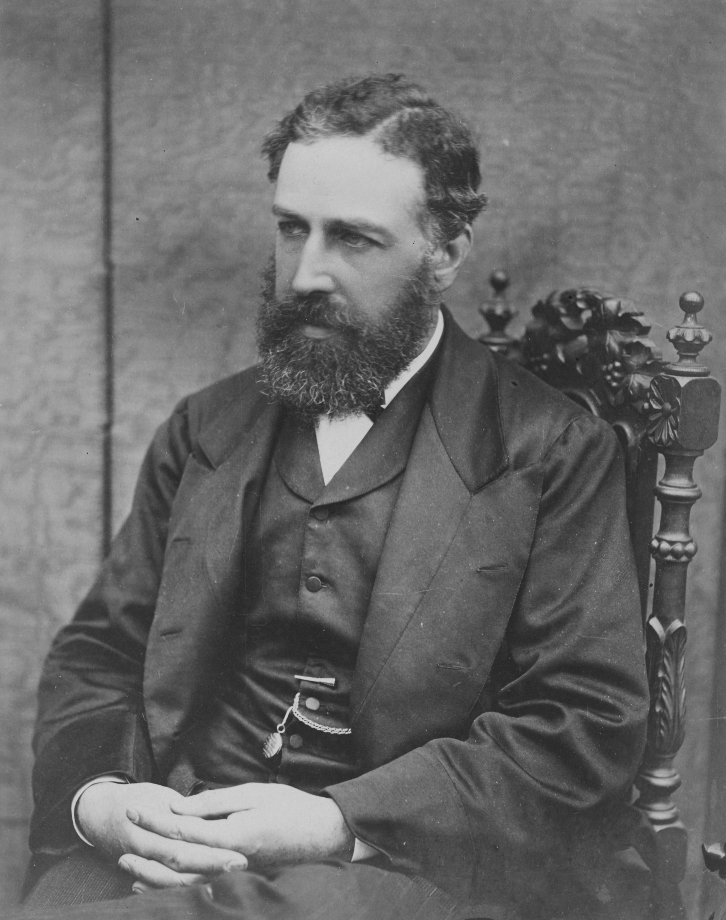
William Stanley Jevons (UK)
Unknown (via University of
Manchester Libraries),
CC BY-SA 4.0, via
Wikimedia Commons
Unknown (via University of
Manchester Libraries),
CC BY-SA 4.0, via
Wikimedia Commons
While Marx critiqued capitalism, another revolution was reshaping mainstream economics. The Marginal Revolution of the 1870s—led by William Stanley Jevons (UK), Carl Menger (Austria), and Léon Walras (France/Switzerland)—shifted focus from production and labor to individual decision-making and marginal utility.
Key ideas:
-
Value depends on marginal utility (the additional satisfaction from one more unit), not just labor.
-
Mathematical modeling became central, seeking precision in economic analysis.
-
Markets tend toward equilibrium, balancing supply and demand through price adjustments.
2. Neoclassical Microeconomics
Alfred Marshall (1842–1924) synthesized these ideas in Principles of Economics (1890), establishing microeconomics as a field. He introduced:
-
Supply and demand curves.
-
Elasticity (responsiveness of demand or supply to price changes).
-
Consumer surplus (the difference between what consumers are willing to pay and what they actually pay).
Marshall bridged theory with real-world application, making neoclassical economics dominant in academia.
3. Core Assumptions
Neoclassical economics rests on several assumptions:
-
Individuals are rational utility maximizers.
-
Firms seek to maximize profits.
-
Perfect competition leads to efficient outcomes.
-
Markets, left alone, allocate resources optimally.
4. Critiques of Neoclassical Economics
While powerful, the model was criticized for being too abstract and unrealistic:
-
Assumes perfect information and rational behavior.
-
Ignores inequality and power imbalances.
-
Struggles to explain crises or unemployment.
Despite these critiques, neoclassical economics remains the backbone of modern microeconomic theory.
VII. The Keynesian Revolution (20th Century)
1. The Great Depression and the Failure of Classical Economics
The Great Depression (1929–1939) was a turning point. Classical and neoclassical models assumed markets self-correct, but unemployment soared, banks collapsed, and output plummeted. Governments initially cut spending, deepening the crisis. The situation demanded new ideas.

John Maynard Keynes
Deathtorn, CC BY-SA 3.0,
via Wikimedia Commons
2. John Maynard Keynes and The General Theory (1936)
Deathtorn, CC BY-SA 3.0,
via Wikimedia Commons
John Maynard Keynes (1883–1946) revolutionized economics with The General Theory of Employment, Interest and Money.
Key insights:
-
Aggregate demand drives output and employment. Insufficient demand leads to prolonged recessions.
-
Government intervention is necessary. Fiscal policy (spending, taxation) can stabilize the economy.
-
Multiplier effect: Public spending stimulates further economic activity.
-
Rejection of Say’s Law: Supply does not always create its own demand; demand shortages cause recessions.

World Bank HQ
Main Complex Atrium
Jaakko H., CC BY-SA 3.0,
via Wikimedia Commons
Main Complex Atrium
Jaakko H., CC BY-SA 3.0,
via Wikimedia Commons
3. Keynesian Policy in Action
Post-WWII, Keynesian economics guided policy worldwide:
-
Governments used fiscal stimulus to maintain growth.
-
Welfare states expanded, reducing inequality.
-
Institutions like the IMF and World Bank reflected Keynesian thinking.
The result was the Golden Age of Capitalism (1950s–1970s)—a period of high growth, rising wages, and low unemployment in many advanced economies.
4. Critiques and Challenges
By the 1970s, stagflation (simultaneous inflation and unemployment) undermined Keynesian models. Critics argued that excessive intervention created inefficiencies and inflationary pressures. This paved the way for a resurgence of free-market ideas, particularly Monetarism.
VIII. Monetarism and Free-Market Revivals
.jpg) |
| Milton Friedman Bachrach Studios, Public domain, via Wikimedia Commons |
1. Milton Friedman and the Monetarist School
Milton Friedman (1912–2006), leader of the Chicago School, argued that government intervention often destabilizes economies. Instead, monetary policy—controlling the money supply—was the key to stability.
Core principles:
-
Inflation is always a monetary phenomenon.
-
Fiscal policy is less effective than central bank control of money.
-
Free markets, not governments, best allocate resources.
2. Policy Applications
Friedman’s ideas gained traction in the 1970s and 1980s:
-
U.S. President Ronald Reagan and UK Prime Minister Margaret Thatcher implemented deregulation, tax cuts, and privatization.
-
Central banks, notably the U.S. Federal Reserve, prioritized controlling inflation over maximizing employment.
Monetarism marked a return to classical liberalism, reshaped for a modern era.
_(53844898894).jpg) |
| International Monetary Fund (IMF) Washington, DC ajay_suresh, CC BY 2.0, via Wikimedia Commons |
3. Neoliberalism and Globalization
Closely related to monetarism, neoliberal economics promoted free trade, deregulated markets, and global integration.
The 1990s saw widespread adoption of structural adjustment programs through institutions like the IMF, reshaping economies in Latin America, Africa, and Asia.
4. Critiques of Monetarism and Neoliberalism
Critics argue that monetarist and neoliberal policies:
-
Increased inequality.
-
Weakened labor protections.
-
Exposed economies to financial crises (e.g., 2008).
Nevertheless, these schools profoundly influenced global policy, especially in the late 20th century.
📌 Summary of Parts V–VIII
From Marx to Friedman, economic thought reflected shifting realities of industrialization, depression, and globalization.
-
Marx exposed capitalism’s contradictions and inspired revolutionary movements.
-
Neoclassical economics formalized microeconomics with rational models and equilibrium analysis.
-
Keynes demonstrated that markets could fail catastrophically, requiring government intervention.
-
Friedman and Monetarism reasserted the power of markets, emphasizing money supply and inflation control.
Together, these theories highlight the dynamic and contested nature of economics—a discipline shaped by crises, ideologies, and evolving global conditions.

.jpg)

_(cropped).jpg)
.jpg)


_2.png)


.jpg)
_(53844898894).jpg)
No comments:
Post a Comment