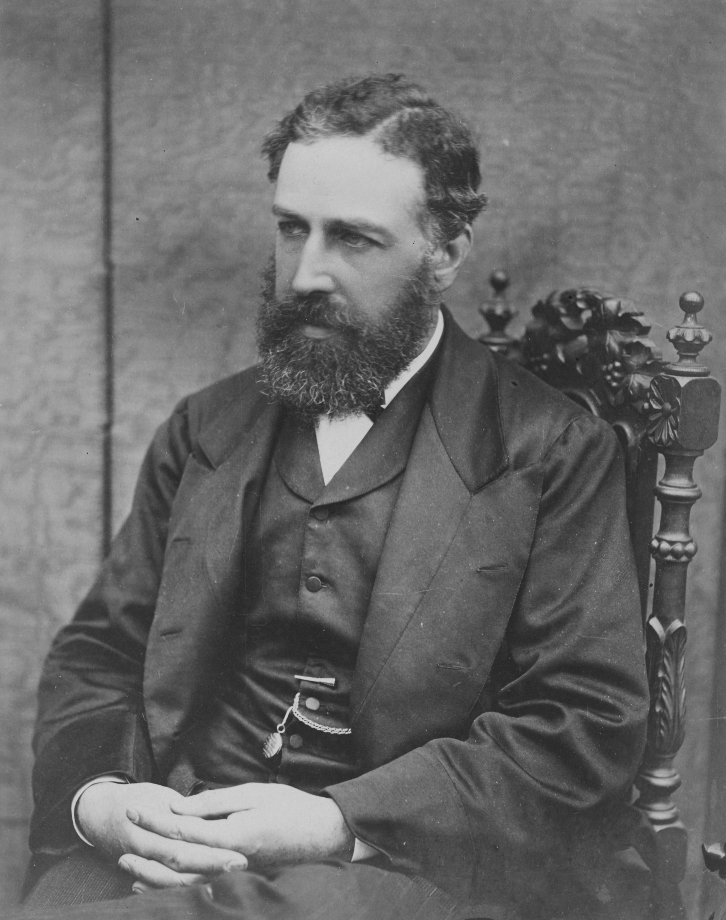
William Stanley Jevons (UK)
Unknown (via University of
Manchester Libraries),
CC BY-SA 4.0, via
Wikimedia Commons
The Rise of Neoclassical Economics: Transforming Economic Thought in the Late 19th Century
Unknown (via University of
Manchester Libraries),
CC BY-SA 4.0, via
Wikimedia Commons
Introduction
The late 19th century witnessed a profound transformation in economic thought. While thinkers like Karl Marx had critiqued the exploitative tendencies of capitalism, a parallel revolution was reshaping mainstream economics—an evolution known as Neoclassical Economics.
This intellectual movement, emerging from the Marginal Revolution of the 1870s, shifted the focus of economics from production and labor to individual decision-making, utility, and market equilibrium.
Neoclassical economics, pioneered by figures such as William Stanley Jevons, Carl Menger, Léon Walras, and Alfred Marshall, introduced new analytical tools, including marginal analysis, mathematical modeling, and the concepts of supply, demand, and consumer surplus. These developments laid the foundation for modern microeconomics, profoundly influencing policy, academia, and the way societies understand resource allocation.
This essay presents a comprehensive narrative of the rise of neoclassical economics, examining its origins, core ideas, key contributors, assumptions, applications, critiques, and enduring influence on contemporary economic theory.
The Marginal Revolution: A Paradigm Shift
The Marginal Revolution of the 1870s marked a pivotal departure from classical economics, which had primarily emphasized labor, production costs, and macro-level wealth. Classical economists, from Adam Smith to David Ricardo, focused on the labor theory of value and production dynamics. Neoclassical economists, by contrast, placed individual choice, preferences, and marginal utility at the center of analysis.
William Stanley Jevons (UK)
Unknown (via University of
Manchester Libraries),
CC BY-SA 4.0, via
Wikimedia Commons
Unknown (via University of
Manchester Libraries),
CC BY-SA 4.0, via
Wikimedia Commons
Key Figures of the Marginal Revolution
-
William Stanley Jevons (UK) – Jevons argued that the value of goods derives not from labor or production costs but from their marginal utility, the additional satisfaction obtained from consuming one more unit.
His work, The Theory of Political Economy (1871), introduced rigorous mathematical methods to quantify utility and decision-making.
-
Carl Menger (Austria) – As the founder of the Austrian School, Menger emphasized that value is subjective, determined by the individual’s perception of utility rather than intrinsic properties. His Principles of Economics (1871) highlighted the role of personal choice in shaping markets and prices.
-
Léon Walras (France/Switzerland) – Walras extended marginalist ideas into general equilibrium theory, modeling how supply and demand interact across multiple markets simultaneously. Using mathematical techniques, he demonstrated that markets tend toward equilibrium, where prices adjust to balance supply and demand.
Core Innovations of the Marginal Revolution
-
Marginal Utility: Value depends on the satisfaction derived from consuming an additional unit, not solely on labor or cost of production.
-
Mathematical Modeling: Economics became increasingly formalized, enabling precise predictions about market behavior.
-
Market Equilibrium: Prices adjust to equate supply and demand, guiding resources toward their most valued uses.
This revolution reframed economic inquiry, focusing on individual behavior, choice, and incentives rather than aggregate production alone.
Neoclassical Microeconomics and Alfred Marshall
While the Marginal Revolution laid the theoretical groundwork, Alfred Marshall (1842–1924) synthesized these ideas and created a practical framework for analyzing markets and human behavior. His Principles of Economics (1890) became the definitive textbook for generations of economists.
Marshall’s Contributions
-
Supply and Demand Curves – Marshall introduced graphical representations of market behavior, showing how price adjusts to balance supply and demand. This innovation allowed economists to visualize market dynamics and predict the effects of changes in prices or external factors.
-
Elasticity – He developed the concept of price elasticity of demand, measuring the responsiveness of quantity demanded to changes in price. This idea remains central in understanding consumer behavior, taxation effects, and policy design.
-
Consumer Surplus – Marshall quantified the difference between what consumers are willing to pay and what they actually pay, highlighting the welfare implications of market transactions.
-
Bridging Theory and Application – By combining rigorous theory with empirical observation, Marshall made economics relevant for policymakers, businesses, and scholars. He established microeconomics as a field and positioned neoclassical economics as the dominant approach in academia.
Marshall’s Legacy
Marshall’s work created a practical, analytical framework that connected abstract marginalist theory with real-world markets. Concepts like demand, supply, elasticity, and consumer surplus became foundational tools in economic analysis and remain central to microeconomic theory today.
Core Assumptions of Neoclassical Economics
Neoclassical economics rests on several fundamental assumptions about individuals, firms, and markets:
-
Rational Utility Maximizers – Individuals are assumed to make choices that maximize their satisfaction or utility, given constraints such as income or prices.
-
Profit-Maximizing Firms – Firms are assumed to seek maximum profit, producing goods at the lowest cost and responding to market signals.
-
Perfect Competition – Many buyers and sellers interact in markets with free entry and exit, ensuring efficient resource allocation.
-
Market Efficiency – Markets, when left alone, are presumed to allocate resources optimally, adjusting prices to balance supply and demand.
These assumptions underpin neoclassical models and provide a framework for analyzing markets mathematically.
Applications and Impact
The rise of neoclassical economics had profound implications for economic theory and policy:
Microeconomic Policy
-
Price and Tax Policy – Concepts like elasticity and consumer surplus inform taxation and subsidies. Policymakers can predict how consumers and producers respond to price changes.
-
Resource Allocation – Marginal analysis guides decisions about efficient allocation of resources, including labor, capital, and natural resources.
Business Strategy
-
Pricing Decisions – Firms use supply and demand analysis to set prices strategically.
-
Market Forecasting – Marginalist models allow businesses to anticipate changes in demand and optimize production.
Academia and Research
Neoclassical economics became the dominant framework in universities, shaping the training of economists worldwide. Its mathematical rigor facilitated the development of advanced fields such as game theory, industrial organization, and welfare economics.
Critiques of Neoclassical Economics
Despite its analytical power, neoclassical economics has faced significant criticism:
-
Abstract and Unrealistic Assumptions – Models assume perfect information, rationality, and competition, which rarely exist in real-world markets.
-
Neglect of Inequality and Power – Neoclassical models focus on efficiency rather than equity, often ignoring the social and political dimensions of wealth distribution.
-
Difficulty Explaining Crises – The assumption of equilibrium struggles to account for financial crises, unemployment, and recessions, which involve instability and irrational behavior.
-
Behavioral and Institutional Limitations – Human behavior often deviates from rational utility-maximization, and institutions can shape markets in ways that neoclassical models overlook.
Despite these limitations, neoclassical economics remains a foundational framework, providing tools for microeconomic analysis, policy evaluation, and business decision-making.
Integration with Modern Economic Theory
Neoclassical economics laid the groundwork for 20th-century developments, including:
-
Welfare Economics – Building on concepts like consumer surplus, economists evaluate efficiency and social welfare in markets.
-
Game Theory and Industrial Organization – Mathematical models of strategic interaction trace their roots to neoclassical assumptions of rationality.
-
Behavioral Economics – While critiquing rationality assumptions, behavioral economists extend neoclassical frameworks to include psychology and decision biases.
-
Macroeconomic Extensions – Neoclassical microeconomic principles underpin models of growth, labor markets, and international trade.
The Global Influence of Neoclassical Economics
Neoclassical economics not only dominated academic thought but also shaped global policy:
-
International Trade Theory – Marginal analysis and equilibrium models inform modern trade policies, tariffs, and agreements.
-
Development Economics – Models of efficiency guide resource allocation, investment strategies, and growth planning in developing countries.
-
Market Liberalization – Neoclassical principles justify free markets, privatization, and deregulation initiatives worldwide.
Through these applications, the insights of Jevons, Menger, Walras, and Marshall continue to influence both theory and practice.
Critiques and Alternative Approaches
Several alternative schools of thought emerged in response to the limitations of neoclassical economics:
-
Keynesian Economics – John Maynard Keynes criticized neoclassical assumptions of full employment and market self-correction, emphasizing aggregate demand and government intervention.
-
Institutional Economics – Emphasizes the role of institutions, history, and social norms, which neoclassical models often abstract away.
-
Behavioral Economics – Challenges assumptions of rational utility maximization by incorporating psychological insights and bounded rationality.
-
Marxist and Post-Keynesian Critiques – Highlighted inequality, exploitation, and structural instability overlooked by neoclassical models.
These critiques have enriched economics by expanding the analytical toolkit and acknowledging real-world complexities.
Enduring Legacy of Neoclassical Economics
Despite criticisms, neoclassical economics remains the backbone of modern microeconomic theory:
-
Its analytical tools are used in teaching, research, and policy design globally.
-
Marginal analysis, supply-demand modeling, and consumer choice theory continue to guide business strategy and economic policy.
-
The framework has evolved, integrating insights from behavioral economics, game theory, and empirical methods.
Neoclassical economics’ mathematical precision, focus on individual choice, and emphasis on efficiency ensure its continued relevance in economic analysis and policymaking.
Conclusion
The rise of neoclassical economics in the late 19th century represented a transformative shift in economic thought. Moving away from labor-based value theories and aggregate production, the Marginal Revolution placed individual decision-making, marginal utility, and market equilibrium at the center of economic analysis.
Alfred Marshall’s synthesis bridged theory with real-world application, introducing tools like supply-demand curves, elasticity, and consumer surplus, solidifying microeconomics as a dominant field. Neoclassical economics relies on rationality, profit-maximization, and market efficiency, offering a powerful framework while attracting critiques for abstraction, equity neglect, and inability to explain crises fully.
Despite limitations, its influence is undeniable: neoclassical economics informs policy, business, international trade, development economics, and academic research, forming the analytical backbone of modern economics. By emphasizing individual choice, incentives, and efficiency, the rise of neoclassical economics fundamentally reshaped how societies understand markets, behavior, and the allocation of scarce resources.


No comments:
Post a Comment