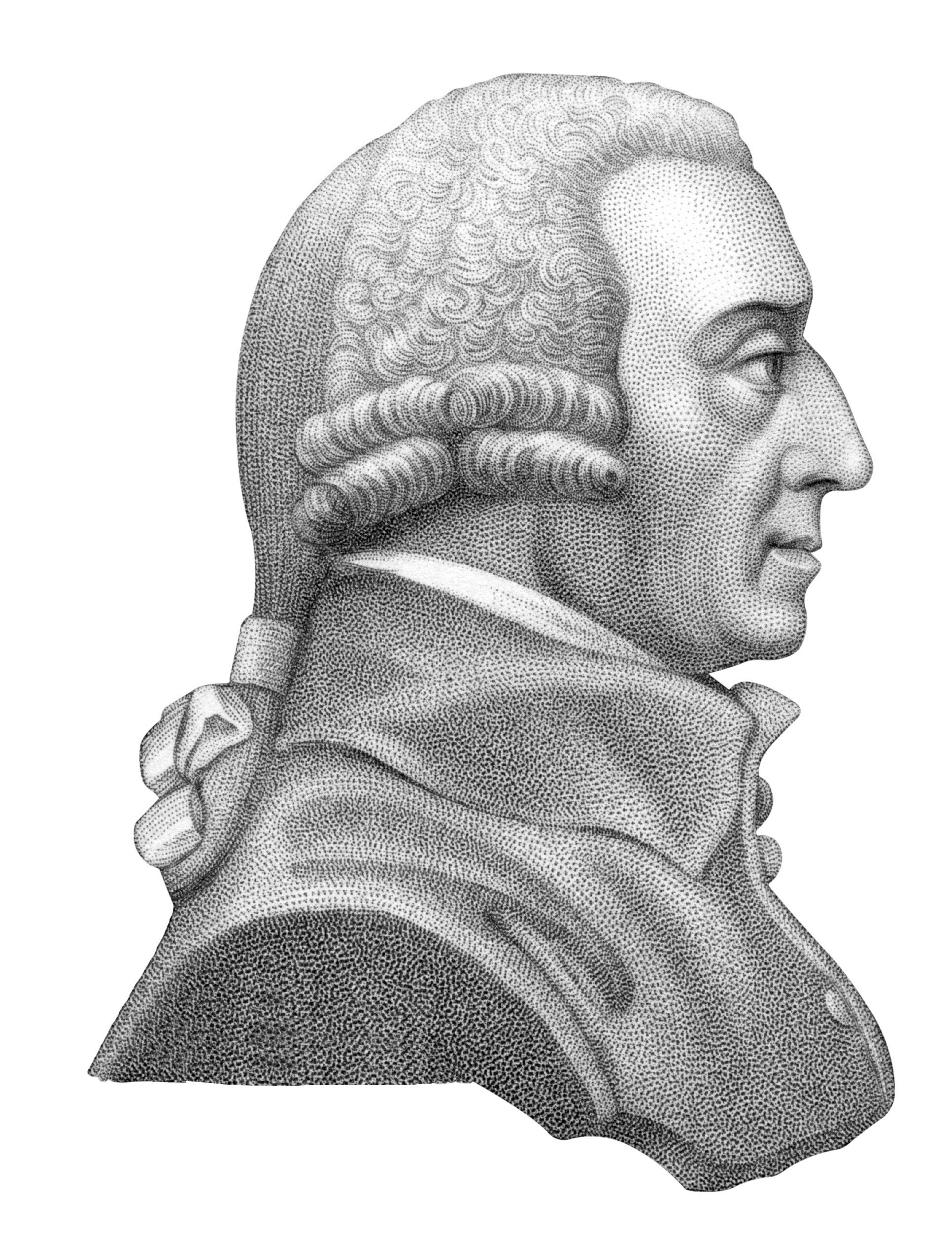
Adam Smith
Adam Smith Business School,
CC BY-SA 4.0, via Wikimedia Commons
Introduction: Adam Smith and the Birth of Modern Economics
Adam Smith Business School,
CC BY-SA 4.0, via Wikimedia Commons
When people call Adam Smith the “Father of Modern Economics,” it is not an exaggeration. His monumental work, An Inquiry into the Nature and Causes of the Wealth of Nations (1776), commonly referred to as The Wealth of Nations, fundamentally reshaped the way the world thought about trade, markets, and prosperity.
Smith’s insights provided the intellectual foundation for what we now call classical economics, a discipline that has shaped not only academic thought but also government policy and global trade for more than two centuries.
Before Smith, the dominant school of thought in Europe was mercantilism, which emphasized hoarding precious metals, strict government regulation, and protectionist policies. Smith turned this logic on its head. He argued that wealth was not gold but productive labor, that markets should be free rather than restricted, and that individual self-interest could benefit society as a whole.
This essay narrates the theory of economics according to Adam Smith, examining his life, the intellectual climate of his time, his groundbreaking ideas in The Wealth of Nations, and his lasting influence on economic theory and practice.
Part I: The Life and Times of Adam Smith
.jpg)
Adam Smith
Scottish National Gallery ,
Public domain,
via Wikimedia Commons
Scottish National Gallery ,
Public domain,
via Wikimedia Commons
Early Life and Education
Adam Smith was born in 1723 in Kirkcaldy, Scotland, a small port town near Edinburgh. His father, also named Adam Smith, was a customs officer who died before Smith’s birth. Raised by his mother, Margaret Douglas, Smith grew up in an environment that valued education and self-discipline.
At age 14, Smith entered the University of Glasgow, where he studied under the philosopher Francis Hutcheson, a leading figure of the Scottish Enlightenment.
Hutcheson’s emphasis on reason, liberty, and moral philosophy deeply influenced Smith’s thinking. Smith then continued his studies at Oxford University, though he found its intellectual environment uninspiring compared to the lively debates of Glasgow.
The Scottish Enlightenment
Smith became part of the Scottish Enlightenment, a remarkable intellectual movement that included thinkers such as David Hume, James Hutton, and Adam Ferguson. This period was marked by an emphasis on reason, science, and human progress. Smith absorbed these ideas and applied them to questions of commerce, trade, and social organization.
Early Work: The Theory of Moral Sentiments (1759)
Before writing The Wealth of Nations, Smith published The Theory of Moral Sentiments, a book that explored ethics, human behavior, and sympathy. Smith argued that humans are motivated not only by self-interest but also by a capacity for empathy and moral judgment. This work laid the philosophical groundwork for his later economic theories, showing that Smith was not a narrow advocate of greed but a thinker deeply concerned with moral society.
Part II: The Wealth of Nations (1776) — Foundations of Modern Economics
When The Wealth of Nations appeared in 1776, the same year as the American Declaration of Independence, it signaled a revolution in thought. Smith provided a comprehensive explanation of how economies function, challenging mercantilism and proposing a new vision based on liberty, competition, and productivity.

Adam Smith
John Kay, Public domain,
via Wikimedia Commons {{PD-US}}
Structure of the Work
John Kay, Public domain,
via Wikimedia Commons {{PD-US}}
The book is divided into five main books:
-
Causes of improvement in productivity (division of labor).
-
Nature of capital, accumulation, and money.
-
Historical evolution of economies.
-
Critique of mercantilism and physiocracy.
-
Role of government in society.
Through these sections, Smith covered everything from pin factories to international trade, providing a systematic account of how wealth is created and distributed.
Part III: Key Economic Theories of Adam Smith
1. The Division of Labor
One of Smith’s most famous insights is the division of labor. In his pin factory example, he showed how ten workers, by specializing in different tasks, could produce thousands of pins a day, whereas one worker alone might produce only a handful.
This principle revealed how specialization increases efficiency, boosts productivity, and expands wealth. Smith argued that the division of labor was the driving force behind economic progress, and he linked it to the expansion of markets: the more people can trade, the more specialization can occur.
However, Smith also recognized potential downsides: extreme specialization could make workers dull and alienated, reducing their intellectual and social capacities. He suggested education as a remedy, showing his concern for human well-being, not just profits.
2. The Invisible Hand
Perhaps Smith’s most enduring metaphor is the “invisible hand.” He observed that when individuals pursue their own self-interest—seeking profit, for example—they often, without intending it, contribute to the prosperity of society as a whole.
For instance, a baker does not bake bread to feed the community but to earn a living. Yet by doing so, he provides a good that people need, creates jobs, and stimulates trade. In this way, markets coordinate activity more effectively than central planning.
The invisible hand has been interpreted (and sometimes misinterpreted) as a defense of laissez-faire economics. In truth, Smith’s idea was more nuanced: he believed self-interest was powerful, but it required competition, justice, and rule of law to function properly.
3. Free Markets and Trade
Smith was a strong critic of mercantilism, which saw trade as a zero-sum game where one nation’s gain was another’s loss. Instead, Smith argued that trade is mutually beneficial: both sides gain by specializing in what they do best and exchanging goods.
He advocated for free trade and warned against protectionist policies, tariffs, and monopolies. By opening markets, nations could grow wealthier and more innovative. This idea became the intellectual foundation of modern capitalism and globalization.
4. The Limited Role of Government
While Smith opposed mercantilist micromanagement, he did not call for a minimal or absent state. Instead, he outlined three essential roles for government:
-
Defense: Protecting society from external threats.
-
Justice: Enforcing laws, contracts, and property rights.
-
Public Works: Providing infrastructure and institutions that private enterprise would not supply profitably (roads, bridges, schools).
Smith thus supported a limited but vital role for government, recognizing that markets alone could not meet every social need.
5. Value and Price Theory
Smith distinguished between use value (utility) and exchange value (what something can be traded for). He also introduced the labor theory of value, arguing that the real measure of value was the labor embodied in a good. Later economists refined this theory, but Smith’s distinction between natural price (long-term equilibrium price) and market price (short-term fluctuations) remains influential.
6. Capital Accumulation and Growth
Smith saw capital accumulation—the reinvestment of profits—as the engine of growth. He emphasized savings and investment as critical for expanding production and prosperity. Importantly, he recognized that wealth came not from hoarding gold but from productive labor and reinvestment in industry.
Part IV: Adam Smith vs. Mercantilism

Adam Smith
Vladimír Krupa 81, CC0,
via Wikimedia Commons
1. The Dominance of Mercantilism
Vladimír Krupa 81, CC0,
via Wikimedia Commons
Before Adam Smith, mercantilism was the dominant economic doctrine in Europe (16th–18th centuries). It emphasized:
-
Accumulation of gold and silver.
-
Government regulation of trade.
-
Export promotion and import restriction.
-
Use of colonies for raw materials and markets.
Mercantilism viewed the economy as a zero-sum game—one nation’s gain was another’s loss. This led to protectionism, monopolies, and even wars fought over trade routes and colonies.
2. Smith’s Critique of Mercantilism
Adam Smith rejected mercantilist assumptions on multiple grounds:
-
Wealth is not gold but productive labor. True prosperity lies in the capacity to produce goods and services.
-
Trade is not zero-sum but mutually beneficial. Free exchange expands wealth for all participants.
-
Regulation and monopolies stifle competition. Smith saw monopolies, guild restrictions, and tariffs as obstacles to growth.
-
Government should not micromanage trade. The state’s role is to secure property rights and public goods, not manipulate commerce.
By dismantling mercantilist orthodoxy, Smith freed economics from the grip of protectionism and laid the foundation for modern capitalism and global free trade.
3. The Intellectual Revolution
Smith’s Wealth of Nations was not just an economic manual—it was a philosophical revolution. It aligned with Enlightenment values: individual liberty, rational inquiry, and progress. Instead of seeing wealth as finite, Smith envisioned a world of expanding prosperity through specialization, trade, and innovation.
This vision was profoundly optimistic compared to the restrictive worldview of mercantilists. It suggested that economic progress was not only possible but natural when people pursued their interests within fair and competitive markets.
Part V: Legacy and Influence of Adam Smith
1. Influence on Classical Economists
Smith’s ideas provided the intellectual scaffolding for classical economics. Thinkers like David Ricardo, Thomas Malthus, and John Stuart Mill expanded on his insights:
-
Ricardo developed the theory of comparative advantage, formalizing Smith’s ideas on free trade.
-
Malthus applied Smith’s principles to population and resource limits.
-
Mill refined Smith’s ideas on liberty, justice, and government roles.
Together, they built an economic tradition that dominated the 19th century and shaped industrial capitalism.
2. Impact on Policy and Global Trade
Smith’s advocacy of free trade influenced policies across Europe and the Americas. The repeal of the Corn Laws in Britain (1846), a move toward free grain imports, was directly inspired by Smithian economics. In the 20th and 21st centuries, trade agreements like GATT and the WTO echoed Smith’s principles of open markets.
His ideas helped legitimize capitalism as the leading global economic system, transforming economies from mercantilist empires to competitive markets.
3. Critiques of Smith
Despite his towering influence, Smith’s ideas have been debated and critiqued:
-
Karl Marx accused Smith of overlooking exploitation in capitalist production.
-
Keynes argued Smith underestimated the potential for markets to fail in times of crisis.
-
Behavioral economists criticize the assumption of rational self-interest, noting that humans often act irrationally.
Still, many critiques are reinterpretations rather than rejections, showing Smith’s continued relevance as a starting point for economic debate.
4. Misunderstandings of Smith
Smith is often caricatured as a prophet of greed and laissez-faire economics. In reality, he recognized the dangers of monopolies, the importance of justice, and the role of government in providing education and infrastructure. He was not a libertarian ideologue but a pragmatist balancing liberty with responsibility.
Part VI: Adam Smith in the 21st Century
1. Globalization and Free Trade
Smith’s vision of mutually beneficial trade resonates strongly in the age of globalization. The expansion of global supply chains and international commerce reflects his idea that nations prosper by specializing and trading.
Yet, globalization also exposes limits:
-
Not all nations benefit equally.
-
Trade can lead to job losses in some sectors.
-
Global markets can exacerbate inequality.
Smith’s optimism about free trade remains relevant, but his insights must be adapted to modern complexities.
2. Government Intervention and Market Regulation
Smith advocated a limited but vital role for government. In the 21st century, this debate continues:
-
Should governments regulate big tech companies?
-
How should they address climate change and inequality?
-
What balance is needed between market freedom and social welfare?
Smith’s framework—government as a provider of justice, defense, and public works—still provides guidance, though modern economies demand broader interventions.
3. Inequality and Ethics
Smith’s moral philosophy in The Theory of Moral Sentiments is often overlooked. He cared about fairness and warned that unchecked self-interest could harm society. Today, debates about wealth inequality, corporate responsibility, and ethical capitalism echo Smith’s concerns.
A 21st-century interpretation of Smith would emphasize not just growth but inclusive prosperity.
4. Sustainability and the Limits of Growth
Smith wrote in an age of expanding resources. Today, economists confront climate change, environmental limits, and sustainability. Would Smith’s theories still apply? Many argue yes—his principles of efficiency, innovation, and public works can support a transition to sustainable economies. A modern “Wealth of Nations” might focus not only on material prosperity but also on ecological balance.
5. The Enduring Relevance of the Invisible Hand
In digital and global markets, the “invisible hand” still operates—millions of individual choices shape supply and demand. Yet the 2008 financial crisis, climate risks, and pandemics show that markets alone cannot ensure stability or fairness. Smith’s nuanced vision—self-interest guided by competition, justice, and government oversight—remains as relevant as ever.
Conclusion: Why Adam Smith Still Matters
Adam Smith’s Wealth of Nations was more than a book—it was a paradigm shift. He redefined wealth, dismantled mercantilism, and introduced principles that continue to guide modern economies: division of labor, free markets, limited government, and the invisible hand.
His legacy is complex. He was not a prophet of unregulated capitalism but a philosopher of liberty, justice, and human progress. In a world grappling with globalization, inequality, and sustainability, Smith’s insights remain a compass.
More than 240 years after The Wealth of Nations was published, Smith’s theory of economics still inspires scholars, policymakers, and citizens searching for ways to balance prosperity, fairness, and freedom.


.jpg)


No comments:
Post a Comment