 |
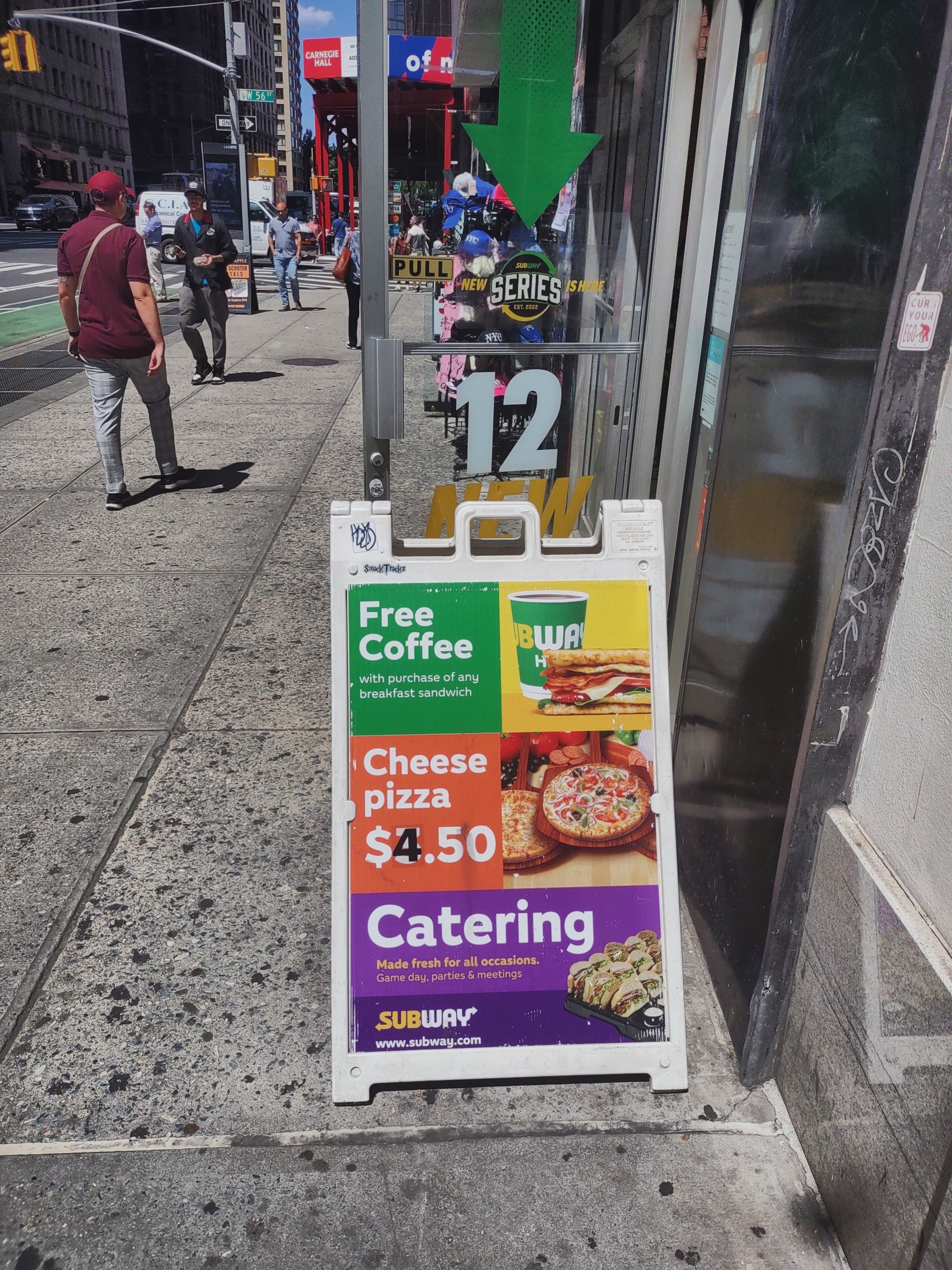
| Subway Inflation Jim.henderson, CC BY-SA 4.0, via Wikimedia Commons |
Inflation and deflation are two fundamental macroeconomic phenomena that lie at the heart of price stability, monetary policy, and economic growth.
They represent opposite movements in the general price level, and their presence (or absence) exerts profound influence over consumption, investment, saving, debt, financial markets, and the overall stability of economies.
This essay, aims to offer a comprehensive conceptual overview of inflation and deflation, explain their drivers, trace their multiple effects, and compare how different types of economies are differently vulnerable or responsive.
The discussion will also cover policy options and tradeoffs, and conclude with reflections on why moderate inflation may sometimes be beneficial.
Table of Contents
-
Introduction
-
Defining Inflation and Deflation2.1. Inflation: Meaning and Measurement2.2. Deflation: Meaning and Measurement2.3. Disinflation and Related Concepts
-
Theoretical Foundations3.1. Quantity Theory of Money3.2. Aggregate Demand and Aggregate Supply Framework3.3. Expectations, Adaptive vs Rational3.4. The Pigou Effect, Real Balances, and Debt Deflation
-
Causes of Inflation and Deflation4.1. Demand-Pull Inflation4.2. Cost-Push Inflation4.3. Built-in or Wage-Price Spiral Inflation4.4. Imported Inflation4.5. Productivity-Driven (Benign) Deflation4.6. Demand Contraction / Collapse of Aggregate Demand4.7. Excess Capacity, Overproduction, and Deflationary Spirals
-
Effects of Inflation5.1. On Purchasing Power, Consumption, and Saving5.2. On Debt and Borrowers vs Lenders5.3. On Income and Wealth Distribution5.4. On Investment, Capital Allocation, and Uncertainty5.5. On Interest Rates, Monetary Policy, and Central Bank Credibility5.6. On Trade, Exchange Rates, and External Balances
-
Effects of Deflation6.1. On Real Value of Money, Encouraging Consumption?6.2. On Debt Burden and Bankruptcy Risk6.3. On Wages, Unemployment, and Income6.4. On Investment, Business Viability, and Confidence6.5. On Interest Rates and Monetary Policy Constraints6.6. Deflationary Spiral, Liquidity Trap, and Stagnation
-
Comparative Effects in Different Types of Economies7.1. Advanced / Developed Economies7.2. Emerging / Developing Economies7.3. Low-Income / Sub-Saharan / Fragile Economies7.4. Small Open Economies vs Large Closed Economies7.5. Resource-rich vs Manufacturing / Export-oriented Economies
-
Policy Responses and Challenges8.1. Monetary Policy Tools8.2. Fiscal Policy Measures8.3. Structural Reforms, Supply-Side Policies, and Productivity8.4. Inflation Targeting, Credibility, and Communication8.5. Dealing with Deflationary Traps8.6. Coordination and Unorthodox Policies
-
Case Dynamics and Historical Episodes9.1. Hyperinflation Episodes9.2. The Great Depression, 1930s Deflation9.3. Japan’s Lost Decade and Deflation9.4. Recent Inflation Surges
-
Balancing Act: When Moderate Inflation Helps
-
Risks, Tradeoffs, and Concluding Reflections
-
References / Suggested Reading

Large suburban house in Salinas, California.
Brendel, CC BY-SA 2.5, via Wikimedia Commons
1. Introduction
Brendel, CC BY-SA 2.5, via Wikimedia Commons
Inflation and deflation are two fundamental macroeconomic phenomena that lie at the heart of price stability, monetary policy, and economic growth.
They represent opposite movements in the general price level, and their presence (or absence) exerts profound influence over consumption, investment, saving, debt, financial markets, and the overall stability of economies.
Policymakers, economists, businesses, and households all grapple with inflation and deflation because they affect decisions over pricing, wages, borrowing, lending, and resource allocation. While mild inflation is often viewed as a “normal” feature of a growing economy, persistent high inflation or entrenched deflation can be corrosive, destabilizing, and difficult to reverse.
This essay,aims to offer a comprehensive conceptual overview of inflation and deflation, explain their drivers, trace their multiple effects, and compare how different types of economies are differently vulnerable or responsive. The discussion will also cover policy options and tradeoffs, and conclude with reflections on why moderate inflation may sometimes be beneficial.
Throughout the essay, I avoid referring to website names in the main body, but I note that many ideas build on standard macroeconomic textbooks, scholarly articles, and central bank publications.
.jpg)
Hyper Infaltion in Venezuela
Reg Natarajan from Vancouver, Bogotá,
CC BY 2.0, via Wikimedia Commons
2. Defining Inflation and Deflation
Reg Natarajan from Vancouver, Bogotá,
CC BY 2.0, via Wikimedia Commons
2.1. Inflation: Meaning and Measurement
Inflation refers to a sustained increase in the general price level of goods and services over time, which leads to a decline in the purchasing power of money.
In other words, with inflation, each unit of currency buys fewer goods and services than before.
In formal measurement, inflation is typically tracked by percentage changes in price indices such as the Consumer Price Index (CPI), the Producer Price Index (PPI), or the GDP deflator. For example, if the CPI rises from 100 to 103 over a year, one might say inflation is 3% in that period.
Inflation is not about the price of a single item rising (say, apples or petrol) but rather a broad, sustained rise in the overall price level across many goods and services.
2.2. Deflation: Meaning and Measurement
Deflation is the mirror image of inflation: it is a sustained decrease in the general price level, thus implying that money gains in purchasing power. In a deflationary environment, the average level of prices across goods and services is falling.
Deflation is measured in the same way (via price indices), but the inflation rate becomes negative. For example, if the CPI falls from 100 to 97 over a year, that corresponds to a deflation rate of −3%.
Deflation is not simply a short-term drop in one sector’s prices—in healthy economies, some relative prices always move up and down. Deflation becomes problematic when the general trend is downward for most goods and services over a prolonged period.
2.3. Disinflation and Related Concepts
Between inflation and deflation lies disinflation, meaning a reduction in the rate of inflation (prices still rise, but more slowly). Disinflation is often a goal in stabilizing inflation (for example, moving from 6% to 3% inflation). But disinflation that is too fast or severe can risk tipping an economy into deflation if demand is weak.
Another related term is stagflation, where inflation is high but growth is stagnant and unemployment is high—a difficult environment for policy since inflationary control and growth support conflict.
Thus, when we speak of inflation or deflation here, we refer to broad, sustained changes in the general price level, and not just momentary or sectoral shifts.
3. Theoretical Foundations
Understanding inflation and deflation requires some theoretical grounding. Below are key building blocks.
3.1. Quantity Theory of Money
One of the oldest and still influential frameworks is the Quantity Theory of Money, encapsulated in the equation:
M × V = P × T
-
M = money supply
-
V = velocity of money (how often money circulates)
-
P = general price level
-
T = volume of transactions (or real output)
If V and T are relatively stable (or grow slowly), then an increase in M must lead to a proportional increase in P. In more intuitive form:
“Too much money chasing too few goods” leads to inflation.
While the simplistic version is too rigid for modern economies (since V and T are not fixed), it provides a starting point to see how excessive money supply growth relative to real output can drive inflation.
Conversely, if the money supply shrinks (or velocity declines sharply), price levels may fall, contributing to deflation.
3.2. Aggregate Demand and Aggregate Supply Framework
Another widely used macro tool is the Aggregate Demand (AD) — Aggregate Supply (AS) model:
-
AD reflects the total demand for goods and services at different price levels (driven by consumption, investment, government spending, net exports, and monetary conditions).
-
AS, particularly Short-Run AS (SRAS), shows how firms respond to changes in price when input costs or capacity constraints matter.
Inflation can be viewed in this model when AD shifts right (demand-pull inflation) or AS shifts left (cost-push inflation). The intersection of AD and AS determines the equilibrium price level and output.
If AD is too strong relative to AS, the price level rises. If AS contracts due to cost shocks, equilibrium prices rise and output falls (stagflation scenario).
For deflation, AD may shift left (demand collapse), pushing the equilibrium price level downward, or AS may shift right due to productivity gains and cost reductions, putting downward pressure on prices.
This framework aids in visualizing how the economy responds to shocks in demand or supply.
3.3. Expectations: Adaptive and Rational
Expectations matter. If economic agents (households, firms, workers) expect higher inflation in the future, they may act accordingly (e.g. demanding higher wages, preemptive price hikes). This can create a self-fulfilling inflationary process (so-called built-in inflation).
-
Adaptive expectations: Agents extrapolate past inflation into the future.
-
Rational expectations: Agents use all available information and policy signals to anticipate inflation changes.
Policies must manage expectations; otherwise inflation becomes entrenched.
In deflationary periods, expectations of further price declines can discourage current spending and investment—agents wait in hope of lower prices ahead, reinforcing the downward spiral.
3.4. The Pigou Effect, Real Balances, and Debt Deflation
The Pigou effect (or “real balance effect”) suggests that falling prices increase the real value of money holdings (and nominal financial assets), making people feel wealthier and possibly encouraging consumption, which could counteract deflationary pressures.
However, this effect is limited if agents are highly indebted: deflation raises the real burden of debt, potentially offsetting any wealth gain from nominal balances. This leads to debt deflation: as the real value of debt increases, debtors must cut spending (or default), further weakening demand.
Hence, the interplay between real balances and debt burdens is crucial in analyzing deflation dynamics.
4. Causes of Inflation and Deflation
Let us now dissect, in more depth, the drivers behind inflation and deflation.
4.1. Demand-Pull Inflation
This is perhaps the most intuitive cause: when aggregate demand in the economy rises beyond the economy’s productive capacity, the excess demand pushes up prices.
Sources of demand-pull inflation include:
-
A surge in consumer confidence and spending
-
Expansionary fiscal policy (e.g. increased government spending or tax cuts)
-
Loose monetary policy (low interest rates, high credit growth)
-
Strong export demand
-
Rapid growth in money supply or credit
In the AD–AS framework, this corresponds to a rightward shift in AD, pushing up both output (in the short run) and the price level.
4.2. Cost-Push Inflation
Here inflation originates from rising costs of production (e.g. wages, raw materials, energy, commodity prices). Firms pass on higher input costs to consumers in the form of higher prices.
Common sources:
-
Wage increases that outpace productivity
-
Sharp rises in commodity prices (oil, metals, agricultural goods)
-
Supply shocks (natural disasters, disruptions to supply chains)
-
Exchange rate depreciation (raising the domestic cost of imported inputs)
An adverse supply shock shifts the SRAS curve left, raising prices and lowering output—a classical cost-push scenario. This can also produce stagflation if aggregate demand remains stagnant or declines.
4.3. Built-in or Wage-Price Spiral Inflation
This type of inflation arises when inflation becomes embedded in expectations: workers demand higher wages to maintain real incomes; firms raise prices to cover higher wages, creating a wage-price spiral. Over time, this can result in inflation inertia, making inflation difficult to dislodge.
Indexation of wages or contracts to inflation (automatic adjustment) may contribute to this. The “triangle model” of inflation often includes a built-in or inertial component.
4.4. Imported Inflation
Countries that import essential goods (energy, raw materials, food) are vulnerable to imported inflation: when global prices rise or the domestic currency depreciates, the local price of imports rises, feeding into domestic inflation.
Especially for small open economies, the exchange rate transmission is critical—if a currency weakens, import costs increase, contributing to domestic inflation.
4.5. Productivity-Driven (Benign) Deflation
In some cases, productivity gains, technological improvements, or cost-cutting innovations lead to lower costs of production, which can be passed to consumers as lower prices—i.e. benign deflation. This is less harmful and may even enhance real income and growth.
When supply-side improvements outpace demand, deflation may result even in a healthy economy.
4.6. Demand Contraction / Collapse of Aggregate Demand
A sudden drop in aggregate demand (due to financial crisis, collapse of credit, consumer pessimism, external shocks) can lead to downward price pressure as firms try to cut prices to attract buyers. This is a classical route to deflation.
The demand collapse may come from falls in consumption, investment, or government spending.
4.7. Excess Capacity, Overproduction, and Deflationary Spirals
When industries overinvest, producing more than consumers demand, excess capacity can force firms to discount prices. That leads to lower revenues, cutbacks in production and wages, reduced demand for other goods—the downward spiral accelerates.
With each round of cuts, the downward pressure on prices strengthens, possibly resulting in a deflationary spiral.
5. Effects of Inflation
Here we map out the major channels through which inflation affects economic agents and the broader economy.
5.1. On Purchasing Power, Consumption, and Saving
Inflation erodes the real value of money, meaning cash holdings lose purchasing power over time. This incentivizes spending (rather than hoarding cash) and investment in assets that preserve value (real assets, equities, inflation-indexed securities).
However, if inflation is too high or volatile, it adds uncertainty: households may struggle to plan budgets, especially low-income families whose incomes may not keep pace.
Savings held in nominal fixed-income instruments (like unindexed bonds or deposits) suffer because real returns are lower (or negative, if inflation exceeds nominal interest). In effect, inflation penalizes savers unless they can find inflation-protected instruments.
5.2. On Debt, Borrowers vs Lenders
One of the classic distributional effects: inflation favors borrowers and harms lenders. Suppose you borrow at a fixed nominal rate. If inflation increases, the real value of repayment diminishes, so you repay in “cheaper” dollars. Meanwhile, lenders lose purchasing power on their return.
However, this is true only if interest rates are not fully index-adjusted, and if inflation surprises lenders (i.e. unanticipated). If inflation is expected, lenders may charge higher nominal rates to compensate.
This dynamic can encourage debt-financed consumption or investment in high-inflation settings, but it also introduces credit risk, as excessive borrowing may lead to defaults when inflation is volatile or hyper.
5.3. On Income and Wealth Distribution
Inflation tends to be a regressive tax: it often hurts those on fixed incomes (retirees, pensioners), whose incomes may not adjust quickly. It also erodes savings, which disproportionately affects middle-class and lower-middle-class households who rely on bank deposits.
Conversely, those with real assets (real estate, equities, commodities) often benefit, as asset values may adjust upward with inflation. Borrowers with debt may benefit from eroded real obligations.
Within wages, if wage increments lag inflation (wage stickiness), real wages may decline, hurting labor. Skilled labor or those with bargaining power may maintain real wage growth, further widening income inequality.
5.4. On Investment, Capital Allocation, and Uncertainty
Moderate and stable inflation gives firms confidence to invest (they expect cost and price changes can be managed). But high inflation increases uncertainty, making it harder to forecast costs, demand, and returns.
Inflation can distort relative prices: some sectors may inflate faster than others, causing misallocation of resources. It may also penalize long-term investment (in infrastructure, manufacturing) if costs escalate unpredictably.
Furthermore, inflation can trigger capital flight or speculative behavior—resources may flow into nominal hedges rather than productive real investment.
5.5. On Interest Rates, Monetary Policy, and Central Bank Credibility
Central banks use nominal interest rates as a key tool. The Fisher equation ties nominal rate, real rate, and inflation:
nominal rate ≈ real rate + expected inflation
Thus, if inflation rises, nominal rates must rise (if the central bank maintains a positive real rate). This can crowd out investment or raise borrowing costs.
When inflation expectations become unanchored, central banks must act forcefully (by raising rates, tightening credit), risking recession. The credibility of the central bank in maintaining low and stable inflation is critical; if the public has confidence, inflation expectations remain in check; if not, inflation becomes self-fulfilling.
5.6. On Trade, Exchange Rates, and External Balances
Inflation affects exchange rates: higher domestic inflation relative to foreign inflation tends to depreciate the currency, making imports more expensive. This can worsen inflation further (imported inflation) and hurt foreign debt repayment.
Exports may become more competitive (cheaper in foreign currency terms), but if inflation persists or exchange rate volatility is high, the trade balance may not improve much.
Moreover, countries that borrow in foreign currency can suffer greatly: if domestic inflation weakens the currency, servicing foreign debt becomes more expensive in local terms.
6. Effects of Deflation
Though deflation might superficially appear beneficial (goods get cheaper), its broader effects are often harmful. Below are the various channels.
6.1. On Real Value of Money: Encouraging Consumption?
Deflation increases the real value of money and nominal financial assets (e.g. bank balances), potentially giving consumers a sense of wealth. In that sense, people might postpone consumption (expecting lower prices later) or feel more comforted holding cash.
However, this effect (Pigou effect) is usually weak when debt burdens loom large.
6.2. On Debt Burden and Bankruptcy Risk
One of the most pernicious effects: deflation increases the real burden of debt. If prices (and incomes) fall, but nominal debt remains fixed, the real cost of servicing debt rises. This squeezes households and firms, increases defaults, bankruptcies, and non-performing loans.
This is the debt-deflation mechanism first emphasized by economists like Irving Fisher.
6.3. On Wages, Unemployment, and Income
Deflation often forces firms to cut wages or employment to maintain profitability. But wages are sticky downward—workers resist nominal wage cuts, which may lead to layoffs instead. Thus, deflation is often accompanied by rising unemployment and stagnant or falling incomes.
Reduced incomes further depress aggregate demand, creating a vicious cycle.
6.4. On Investment, Business Viability, and Confidence
In a deflationary environment, firms expect lower future prices, lower sales revenue, and possibly shrink capacity. Investment is postponed or cancelled. Business confidence plummets. The incentive to invest shrinks: why invest today if next year output is cheaper?
Furthermore, credit conditions tighten, borrowing is risky, and viability of businesses is under stress.
6.5. On Interest Rates and Monetary Policy Constraints
Nominal interest rates cannot fall below zero (or only a small negative margin). When deflation targets real interest rates significantly positive, monetary authorities may lack room to stimulate demand further—leading to a liquidity trap.
In this scenario, even zero (or near-zero) nominal rates may be insufficient to offset deflation. Monetary policy becomes less effective. This is a central challenge in combating deflation.
6.6. Deflationary Spiral, Liquidity Trap, and Stagnation
When deflation triggers further drops in consumption and investment, the economy can fall into a deflationary spiral—demand shrinks, firms cut prices further, debt stress increases, confidence collapses, and the downward trajectory reinforces itself.
A liquidity trap occurs when conventional monetary policy is powerless: people hoard cash; interest rates are stuck at zero; further cuts do little to stimulate spending.
This environment often leads to prolonged stagnation or depression, as witnessed historically in various economies.
7. Comparative Effects in Different Types of Economies
The impact of inflation or deflation is not uniform across countries—different kinds of economies face distinct vulnerabilities and dynamics.
7.1. Advanced / Developed Economies
In developed economies:
-
Financial systems are deep, with diverse instruments (inflation-indexed bonds, derivatives) that help hedge inflation risk.
-
Credibility of central banks is higher; inflation expectations are more anchored.
-
Lower levels of informal sectors and better institutional frameworks help in implementing monetary and fiscal policy.
-
However, high debt levels (government, household) pose risk: inflation can erode real debt burdens, but also cause sharp interest rate responses.
-
Deflation in advanced economies is more worrying: negative interest rate policy (NIRP) might be tried, quantitative easing may become necessary.
Hence, moderate inflation (e.g., 2%) is often seen as tolerable, even desirable, to avoid the risks associated with deflation. Long-term investments and capital-intensive operations require a stable inflation environment.
7.2. Emerging / Developing Economies
Emerging markets occupy a middle ground. Key features:
-
Greater exposure to imported inflation (via commodities, fuel, capital goods).
-
Weaker monetary policy credibility and possibly higher inflation expectations.
-
Less depth in financial markets; fewer inflation-hedging instruments available to the public.
-
Possibly higher levels of foreign-currency debt; exchange rate depreciation under inflationary pressure can exacerbate external obligations.
-
More limited fiscal space to counter deflation or demand collapse.
In many cases, emerging economies often experience higher average inflation rates (e.g. 5–10%) and must constantly manage inflationary pressures while striving for growth.
Deflation events are rarer but more dangerous in these economies because buffers (social safety nets, monetary flexibility) are weaker.
7.3. Low-Income / Sub-Saharan / Fragile Economies
In low-income, fragile economies:
-
Inflation can be destructive, especially if it becomes hyperinflation, eroding stability, savings, and social trust.
-
Many people live on subsistence or informal sectors; inflation hits them hardest as they have few buffers.
-
Currency instability is common, pushing some into dollarization or barter.
-
Fiscal institutions are often weak, and financing deficits via money creation is frequent, feeding inflation further.
-
Deflation is less common (demand is often constrained), but if it happens, the risk of social collapse increases.
Thus, these economies typically prioritize stability; runaway inflation is among the worst crises they can face.
7.4. Small Open Economies vs Large Closed Economies
Small, open economies are more vulnerable to external shocks—commodity price swings, exchange rate volatility, global inflation trends. Imported inflation or external demand collapse hit them harder.
In contrast, large closed economies (or big economies with diversified trade) have more policy autonomy and buffer from external shocks.
In open economies, policies must often account for exchange rate effects and external balance, complicating inflation/deflation control.
7.5. Resource-Rich vs Manufacturing / Export-Oriented Economies
For resource-rich economies (especially commodity exporters):
-
Inflation pressures often stem from foreign commodity price booms; when prices fall, these economies can face deflationary stress.
-
Revenues from commodity exports often fund large public spending; fluctuations cause volatility in aggregate demand and inflation.
For manufacturing/export-oriented economies:
-
Competition and productivity improvements can restrain inflation.
-
Exchange rate movements and import competition affect their pricing power, making domestic inflation subject to external forces.
-
They may be more exposed to deflationary pressures if global demand weakens.
Thus, sectoral structure matters in how inflation/deflation interact with the broader economy.
8. Policy Responses and Challenges
Having understood the phenomena, the key issue is: how should governments and central banks respond? What are the constraints, tradeoffs, and plausible tools?
8.1. Monetary Policy Tools
-
Interest rate adjustments: Raising rates to curb inflation; cutting rates to stimulate demand (if above zero bound).
-
Open market operations / quantitative easing: Buying government securities, injecting liquidity, especially when interest rates are close to zero.
-
Reserve requirements / capital controls / macroprudential levers: Controlling credit expansion, managing leverage.
-
Forward guidance: Communicating credible future policy to anchor expectations.
-
Inflation targeting: Setting a clear, public inflation target to shape expectations.
Monetary policy is powerful, but in the face of deflation and liquidity traps, it may be constrained.
8.2. Fiscal Policy Measures
When monetary policy is constrained, fiscal actions become more important:
-
Countercyclical spending: Infrastructure investment, social transfers, stimulus to demand.
-
Tax cuts / rebates: Boost disposable income and consumption.
-
Targeted credit / guarantees: To stimulate investment and lending.
-
Debt restructuring: In deflationary contexts, renegotiating or writing down debt burdens.
Fiscal policy must be careful not to trigger inflation (in tight economies) or exacerbate debt problems.
8.3. Structural Reforms, Supply-Side Policies, and Productivity
To manage inflation and sustain growth:
-
Improve productivity, innovation, technology, infrastructure.
-
Promote competition, reduce distortions and bottlenecks.
-
Enhance labor market flexibility and human capital.
-
Improve rule of law, institutions, and policy credibility.
Such reforms help push AS outward, reducing inflationary pressures at given demand levels, and provide long-term resilience.
8.4. Inflation Targeting, Credibility, and Communication
Central banks often adopt inflation targeting (e.g. 2%–4%) to anchor expectations. Success depends heavily on credibility. If agents believe the central bank will take actions to return inflation to the target, expectations remain anchored, reducing volatility.
Clear communication, transparency, and accountability are essential to build and maintain this.
8.5. Dealing with Deflationary Traps
In deflationary regimes:
-
Negative interest rates may be used (if viable) to push real rates lower.
-
Quantitative easing (QE): buying long-dated bonds, assets, injecting liquidity.
-
Helicopter money / direct transfers: directly increasing public disposable income.
-
Debt relief or restructuring: reducing real burden to restore spending capacity.
-
Forward-looking guidance: promise to maintain accommodative policy until inflation is positive.
However, these policies carry risks (asset bubbles, fiscal deficits, distortion of markets).
8.6. Coordination and Unorthodox Policies
In many cases, monetary, fiscal, and structural policies must be coordinated. Unorthodox policies may include:
-
Macroprudential regulation to manage credit booms.
-
Exchange rate interventions in open economies.
-
Capital controls in crisis situations.
-
Natural resource stabilization funds in commodity-dependent countries.
But overuse or poor design can create distortions, moral hazard, or long-term inefficiency.
9. Case Dynamics and Historical Episodes
While I avoid naming websites in the body, it is helpful to illustrate via classic historical cases.
9.1. Hyperinflation Episodes
Certain historical episodes demonstrate the destructive potential of runaway inflation. When money printing becomes the main vehicle for government finance, inflation can spiral, destroying savings, destabilizing societies, and undermining trust in currency.
These cases show how inflation, when unchecked, can destroy institutions, languages of exchange, and lead to barter or alternative currencies.
9.2. The Great Depression, 1930s Deflation
The global depression of the 1930s is a canonical deflation episode: output collapsed, prices fell, debt burdens mounted, and economies entered a deflationary spiral. Many governments and central banks struggled to reverse the downward trend until more aggressive fiscal and monetary interventions were eventually adopted.
This episode illustrates the perils of deflation: protracted unemployment, social distress, underutilized resources, and slow recovery.
9.3. Japan’s Lost Decade and Deflation
Japan’s experience from the 1990s onward is often cited in modern times. After a bubble burst, Japan faced prolonged deflation, weak demand, zero interest rates, periodic stimulus, and slow growth. The Japanese government and central bank tried various unconventional policies (quantitative easing, zero/negative rates), yet deflationary pressures remained strong.
This case shows the difficulty of exiting deflation once it becomes entrenched and the importance of expectations, credibility, structural reforms, and fiscal policy.
9.4. Recent Inflation Surges
Recent years (especially post-pandemic) have seen inflation resurgence in many economies. Supply chain disruptions, energy price shocks, fiscal stimuli, and pent-up demand pushed inflation. Central banks faced the twin challenge of taming inflation without derailing growth.
These episodes emphasize how external supply shocks, demand rebounds, and monetary policy lags can interact to generate inflationary bursts.
10. Balancing Act: When Moderate Inflation Helps
Although inflation is often cast as undesirable, moderate inflation (say 2–3% annually) is widely accepted as beneficial in many economies:
-
It provides a buffer against deflation.
-
It makes room for real wage and price adjustments (nominal rigidity).
-
It reduces the real burden of debt modestly over time.
-
It gives central banks flexibility in interest rate policy (room above zero bound).
-
It encourages spending over hoarding money, smoothing demand.
Hence, the goal for many central banks is not zero inflation, but price stability with low, predictable inflation.
11. Risks, Tradeoffs, and Concluding Reflections
11.1. Tradeoffs and Tensions
-
Controlling inflation vs sustaining growth: Tightening to tame inflation may slow growth.
-
Short-term stimulus vs long-term credibility: Overuse of monetary expansion risks higher inflation expectations.
-
Debt relief vs moral hazard: Forgiving or restructuring debt helps deflationary contexts, but may encourage future imprudent borrowing.
-
Exchange rate management vs domestic stability: In open economies, managing inflation may conflict with maintaining exchange rate competitiveness.
11.2. Endogeneity and Feedback Loops
Inflation and deflation are not just passive outcomes; they affect behavior, expectations, credit, investment, and thus feed back into demand and supply dynamics. The more an economy is leveraged, the more sensitive it is to inflation/deflation.
11.3. The Role of Institutions, Credibility, and Flexibility
Well-designed institutions, credible central banks, rule‐based frameworks, and flexible policy instruments are the best defenses. In economies where institutions are weak or credibility is low, inflation or deflation episodes can be more damaging and persistent.
11.4. The Future: Digital Currencies, Globalization, and Structural Shifts
Looking ahead, structural changes (automation, globalization, digital currencies, demography) may alter inflation dynamics: greater competition, pricing transparency, and global supply chains can temper inflation. But supply constraints, resource limits, and climate shocks may drive upward pressures. The challenge is to manage both inflation and deflation risks in a dynamically evolving world.
12. References / Suggested Reading
Below are some sources and scholarly references that can help deepen your understanding:
-
Investopedia articles on inflation, deflation, and related concepts
-
Macroeconomics textbooks and central bank publications
-
Scholarly papers on deflation and productivity (e.g. “The Impact of Deflation on Productivity and Economic Growth”) SSRN
-
Classic research on inflation–economic growth relationships (e.g. “Inflation, Deflation, and Economic Development”) elibrary.imf.org
-
Educational pages on inflation/deflation mechanisms (e.g. aggregate demand/supply, cost-push and demand-pull) Learn Economics+2stlouisfed.org+2
-
Articles on issues of deflation and problems associated (e.g. “Problems of deflation”) Economics Help


.jpg)
No comments:
Post a Comment